
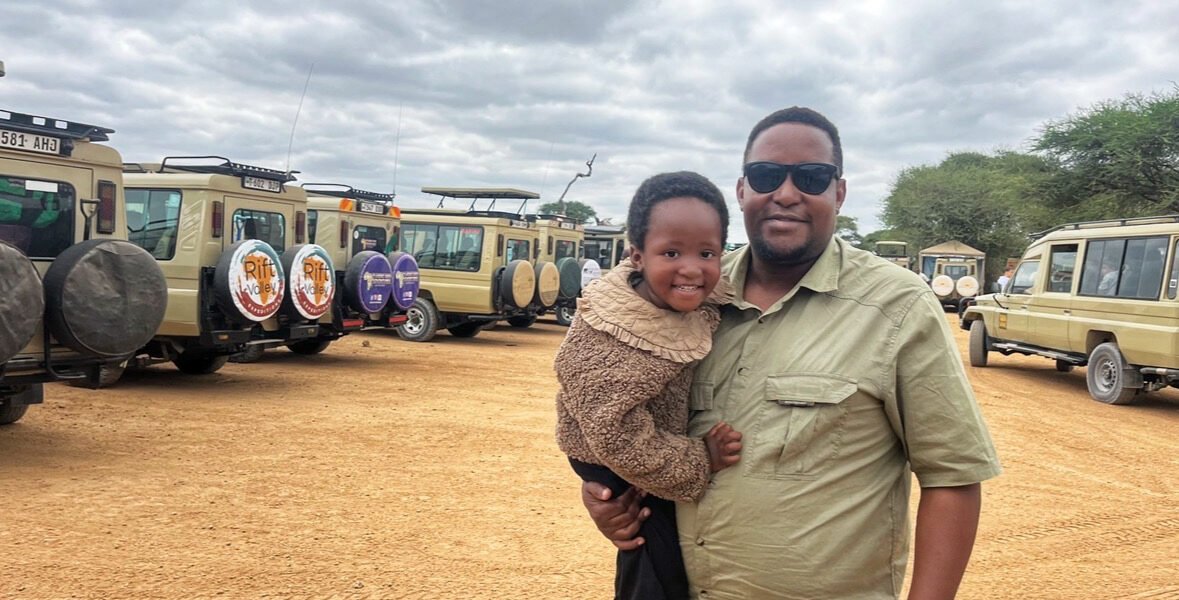
Every year, I return to my hometown Bumbuta in Kondoa. By now, it has become more than just a journey home; it is a tradition that my family and I look forward to every year. We take the long road to this beautiful part of Tanzania, a place I proudly consider one of the most beautiful town on earth.
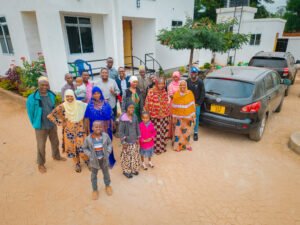
My brothers and sisters -The Mjanjas.
Kondoa has something special. It is a town shaped by history, culture and people. Its ancient heritage, colourful traditions and warm-hearted people—warangi, as we often describe ourselves—make every visit feel like a return to a part of myself.
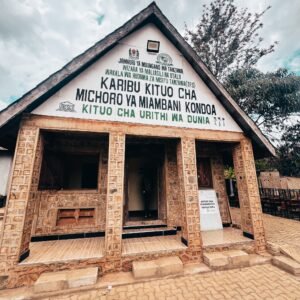
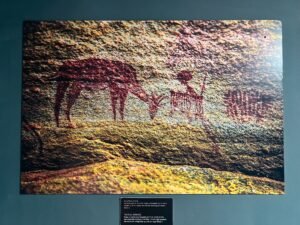
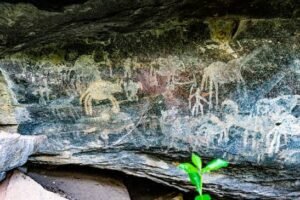
But whenever I am in Kondoa we normally visit Kolo; home of the Kondoa Rock Art Paintings. Kolo is small town that still carries my family history, my mother and her siblings stayed there for quite sometime, they were primary school teachers by then. So, Kolo is rich with cave/rock paintings drawn years back. They also have a small museum and visitors centre that provide Touristic informations to visitors. This time I was fascinated to find some of my pictures of lake Ngosi taken in Mbeya. The centre is now under the management of Tanzania Forest Service which also manage lake Ngosi.
However my thoughts often travel beyond the town itself. I start thinking about Tanzania’s incredible natural heritage and, in particular, the national parks managed by Tanzania National Parks.
This past June, that thought became a journey.
I decided to take a trip to Tarangire National Park—the legendary Elephants’ Paradise.
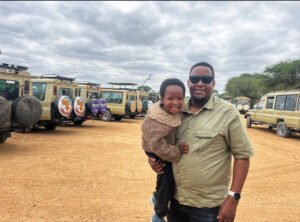
And this time, the journey had an even more special meaning. My firstborn’s birthday was approaching, so the trip was not simply another safari. It became a family adventure, a celebration and an opportunity to create memories together in one of Tanzania’s most remarkable wildlife destinations.
The Road to Tarangire
There is something about traveling by road in Tanzania that cannot easily be explained. The journey itself becomes part of the experience. Leaving Kondoa, the landscape gradually changes. Villages, farms, hills and open spaces pass by the window, offering a reminder of how diverse Tanzania is long before you enter a national park. For me, this was not simply a trip from one destination to another. It was a continuation of a relationship I have with this part of the country—a relationship built through family, travel and a deep appreciation for Tanzania’s landscapes and people.
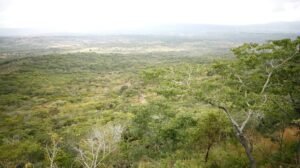
From Kondoa to Babati: The Journey Begins
We drove from Bumbuta then Kolo to catch Dodoma Arusha highway, leaving behind the familiar landscapes of my hometown and heading towards Babati. As with many journeys in northern Tanzania, the road itself became part of the adventure.
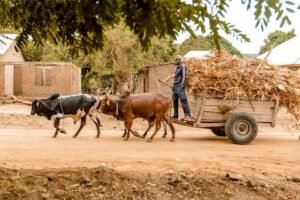
By the time we reached Babati, we were ready to slow down. Babati is one of those towns that immediately makes you feel welcome. The people are warm and friendly, and there is a relaxed atmosphere that makes you want to stay a little longer. We spent the night in town, but before settling in, we made time to visit Lake Babati.
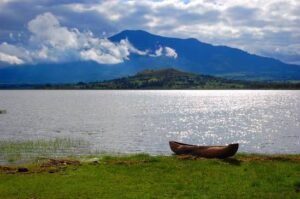
The lake offered us exactly what we needed after the long drive—a chance to relax, enjoy the scenery and share a good meal. We enjoyed some nice food by the lake while taking in the peaceful surroundings. It was a simple stop, but an important part of the journey.
Sometimes the best travel memories are not necessarily the big attractions. They are the conversations, the food, the people you meet and the unexpected moments between one destination and another.
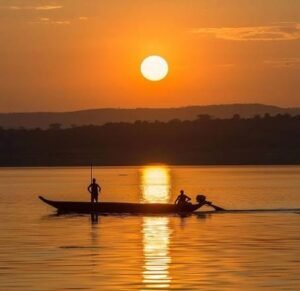
Into the Northern Tourism Circuit
The following morning, we continued towards Tarangire. From Babati, the drive took us roughly two hours, and with every kilometre, the excitement grew. It was about summer, which meant we were traveling during the high season. As we approached the park, the signs of the tourism season were impossible to miss. Safari vehicles were everywhere.
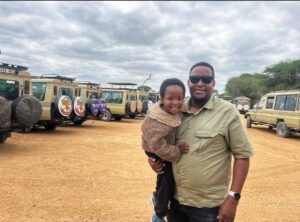
Jeep after jeep was heading in the same direction, carrying visitors eager to experience the wildlife of Tarangire. At the entrance gate, there were many visitors and plenty of activity. The quiet road trip suddenly transformed into the unmistakable atmosphere of Tanzania’s northern tourism circuit. The northern tourism feeling had started to rise. There was something exciting about seeing so many people from different places arriving with the same purpose—to experience Tanzania’s wilderness. We were ready to join them.
Welcome to Tarangire
Once inside the park, we didn’t have to wait long for our first wildlife encounter. Our first sighting was almost perfectly appropriate for Tarangire – The Elephants.
A group of elephants was crossing the road ahead of us. For a park known as the Elephants’ Paradise, there could hardly have been a better welcome. We slowed down and watched them move across the road, one after another. Their size and calm confidence immediately reminded us that we had entered a very different world. The elephants were only the beginning.
As we continued our drive, the landscape began revealing more of Tarangire’s residents.
Zebras appeared, their black-and-white patterns standing out against the surrounding vegetation. Then came Velvet monkeys, active and alert, moving through the trees and along the roadside. And then, towering above much of the landscape, came the Giraffes. Their long necks rose above the vegetation as they moved gracefully through the park. Elephants, Wildebeests, Zebras, Velvet monkeys and Giraffes Within the first part of our safari, Tarangire had already started telling us its story. And we had only just entered.
A Night at Tarangire
After a full day of exploring Tarangire and taking in its wildlife, we spent the night at one of the park’s rest houses. I have stayed in several rest houses in Tanzania’s national parks over the years, so I have had the opportunity to experience different standards, locations and styles of accommodation. But I have to say this: Tarangire’s rest houses impressed me the most.
For me, they stand among the best rest houses I have experienced in our national parks. In fact, based on my own experience, I would put them at the top. There is something special about spending the night inside a national park. The sounds of nature continue around you, and there is a feeling that the park does not really close when the safari vehicles leave for the day.
During the day, Tarangire belongs to the Elephants, Lions, Giraffes, Zebras, Monkeys and all the other wildlife that moves through its landscape. At night, the atmosphere changes. The bush becomes quieter, darker and more mysterious.
For our family, staying inside Tarangire added another dimension to the trip. We were not simply visiting the park during the day and leaving, we were sleeping within the landscape we had spent the day exploring. And that made the experience even more memorable. Having spent time in many national park rest houses, I can confidently say that Tarangire’s rest houses left a lasting impression on me.
Sometimes, the accommodation becomes part of the destination itself. In Tarangire, it certainly did.
THE NEXT MORNING
After hours of game driving, tired eyes scanning every bush and tree, we were almost ready to call it a day. Then suddenly, a whisper from the back seat:
“Dad, is that a tiger?”
We stopped.
There it was — not a tiger, but a magnificent leopard, perfectly hidden behind a blue wildebeest. In an instant, all the fatigue vanished, replaced by excitement, smiles, and wide-open eyes.
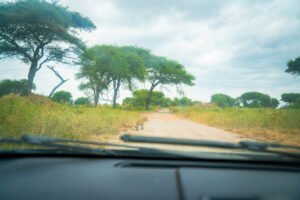
It had been a tough day in Tarangire. Not a single lion, no dramatic sightings, nothing “magical” to share since morning. So when this rare sighting appeared, I quickly radioed Maximilian and some few guides I know in Tarangire. Seven minutes later, what had started as a quiet family moment turned into a drive-in cinema. Nearly 100 safari vehicles were lining up behind us, all eager to catch a glimpse of the master of stealth 🐆
Sometimes the best safari moments come when you least expect them. On this day, the youngest spotter in the vehicle saved the game drive.
This leopard, spotted by young Mwasu, was hunting a herd of wildebeest. But she carried a challenge of her own — an injury to her left rear leg.
We watched her patiently stalk through the grass, making several attempts to catch her prey, only to miss each time. She looked tired, yet determined, reminding us that life in the wild is never easy. As more and more safari vehicles arrived, drawn by the radio calls, she quietly slipped back into the shadows. In true leopard fashion, she became invisible once again — a master of stealth. And that’s the sweetest thing about safari: nothing is scripted. The wild doesn’t perform for us. It simply allows us a brief glimpse into its stories, its struggles, and its resilience.
Today, thanks to Mwasu’s sharp eyes, we witnessed one of those stories.
The moment you enter the park, the atmosphere changes. The landscape opens up, and the famous baobab trees begin to dominate the scenery. Their enormous trunks and unusual shapes stand like ancient guardians of the land. But Tarangire has another defining feature.
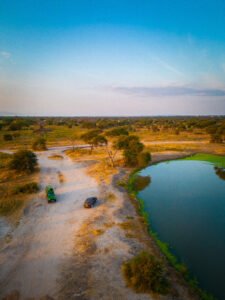
Elephants.
Large herds can be seen moving through the landscape, feeding beneath trees, crossing the road or gathering around water sources. Watching them in their natural environment is one of the experiences that makes Tarangire unforgettable. It is easy to understand why the park has earned its reputation as the Elephants’ Paradise.
A Birthday in the Wild
With my firstborn’s birthday approaching, every sighting seemed to carry a little more meaning. Children experience wildlife differently. For them, seeing an elephant is not simply about identifying a species. It is an encounter with something enormous, mysterious and alive. As we moved through Tarangire, the excitement in the vehicle grew with every animal we encountered. There were moments of silence as we watched wildlife from a respectful distance, followed by conversations, questions and laughter.
So, that afternoon, after our morning game drive, we decided to make the celebration even more memorable. We headed to Tarangire Safari Lodge, one of the private lodges in the park. With the help of our guide, Angel, we were able to reserve a table at the lodge and arrange a special birthday celebration for Mwasu.
It was one of those moments when a safari becomes much more than watching wildlife.
We were celebrating life, family and another year of Mwasu’s journey—but we were doing it in one of Tanzania’s most beautiful wilderness settings. Spending time at Tarangire Safari Lodge was simply magic. That is what makes a family safari so special.
After a morning surrounded by elephants, giraffes, zebras and the endless beauty of the Tarangire landscape, sitting down together for a birthday celebration felt almost unreal. The atmosphere was beautiful. The setting was unforgettable. And seeing Mwasu enjoying the moment made the whole experience even more special. For us, this was not just a birthday lunch or a stop at a lodge.
It became a memory.
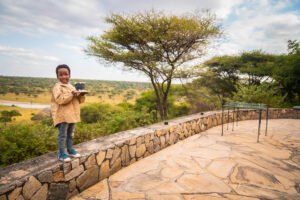
Years from now, Mwasu may not remember every detail of the animals we saw that day. But I hope the feeling of celebrating a birthday with family, surrounded by the wilderness of Tarangire, remains somewhere in the memory. That is the beauty of travel. Sometimes, you set out to see a destination, but you return home carrying a story.
And Mwasu’s birthday became one of ours.
More Than Elephants
Although elephants are the stars of Tarangire, the park is far more than an elephant destination. Its ecosystem supports a remarkable variety of wildlife, from giraffes and zebras to impalas, warthogs, lions and many species of birds. Every turn on the safari road can reveal something different. One moment you may be watching a giraffe feeding among the trees. The next, a herd of zebras crosses the open plains. In another direction, impalas remain alert, constantly scanning their surroundings for predators. And somewhere nearby, there may be a lion resting beneath the shade. This unpredictability is part of the magic of a safari. You never completely know what the next few minutes will bring.
A Personal Connection
The Tarangire river which gives the park its name originates in the highlands of Irangi Hills and Irangi Escarpment in my hometown Kondoa, Its main headwater areas include Wasi highlands – in the Kondoa area, Irangi Hills – Kondoa and also Babati. Its course descends from the Kondoa Escarpment and flows eastwards towards Chubi then turns northwards through Tarangire National Park and eventually drains towards Lake Burunge.
For me, Tarangire was also a reminder of why I keep returning to Tanzania’s wild places. Growing up with a connection to Kondoa and travelling through different parts of the country has taught me that Tanzania’s beauty is not found in one place alone. It is found in our towns. It is found in our people. It is found in our mountains, forests, rivers and ancient cultural sites. And it is found in places such as Tarangire, where wildlife continues to live according to the rhythms of nature. The journey from Kondoa to Tarangire therefore felt like more than a family road trip.
It was a journey through different dimensions of Tanzania—culture, history, family and wildlife. And perhaps that is what makes travelling in this country so rewarding. There is always another road to take. Another landscape to discover. Another story waiting to be told.
And for my family, one of those stories will always be the June trip to Tarangire—the birthday celebration that took us into the Elephants’ Paradise.
Saying Goodbye to Tarangire
After three nights in the park, it was finally time to say goodbye to Tarangire. Three nights may sound like a long time, but in a place like Tarangire, it never feels quite enough. Every morning brings a different landscape, a different animal encounter and a different reason to stay a little longer.
But eventually, every journey has to come to an end.
It was time to unwind, pack our things and begin the journey back home. As we drove away from the park, I found myself looking back at everything we had experienced—the elephants crossing our path, the zebras, giraffes and velvet monkeys, the beautiful landscapes, the peaceful nights in the park and, most importantly, Mwasu’s birthday celebration. What had started as a family journey from Kondoa had become something much bigger.
It had become a story about family, travel, wildlife and the beauty of Tanzania. We left Tarangire with tired bodies but full hearts. And as the road carried us away from the wilderness, one thought stayed with me:
We may have been leaving Tarangire, but Tarangire was coming home with us—in our memories, our photographs and the stories we would tell.
Until next time, Tarangire.
This article was written by Shah Mjanja.
Shah Mjanja is a longtime photographer and tour guide, a writer and producer of television and film features.
Ofisi: Posta House FL,
02 Posta Street, 53100 Mbeya
PO. Box 312 Mbeya
Office: +255 25 250 0103
Mobile: +255-682-326410
Email: shah@everydaymbeya.com
www.everydaymbeya.com


